How Phoenix’s Extreme Heat Affects Your Home’s Plumbing




May 13, 2026
Phoenix summers are punishing in ways that most of the country never experiences. When air temperatures hold above 110 degrees Fahrenheit for weeks at a stretch, the heat does not stay outside. It drives deep into your attic, your walls, and your concrete slab foundation, reaching the pipes and plumbing components your home depends on every day. The result is a specific set of plumbing failures that show up with predictable regularity every June through September in the Valley: slab leaks caused by thermally stressed copper, water heaters working at maximum capacity in already-hot conditions, supply lines that expand and contract until joints fail, and emergency calls that could have been avoided with the right seasonal preparation. This guide covers what heat actually does to your plumbing, which components are most vulnerable, and how to protect your home before summer peaks.
Why Phoenix Heat Is Different From Every Other Climate
The Sustained Heat Problem
Most climates that get hot also cool down significantly at night, giving pipes and building materials time to contract and shed heat. Phoenix does not. During peak summer, overnight lows frequently stay in the mid-80s and even the low 90s. Ground temperatures at slab depth, typically 4 to 8 inches below the surface, can reach 90 to 100 degrees Fahrenheit by midsummer and stay there for months. That sustained thermal load has no real equivalent elsewhere in the continental United States, and it is the primary reason Phoenix plumbing fails in patterns that puzzle contractors from other regions.
Attic Temperatures and Supply Line Exposure
In Phoenix homes, attic temperatures routinely hit 150 to 170 degrees Fahrenheit during summer afternoons. Any supply lines or water heater connections routed through the attic are exposed to those temperatures for 6 to 8 hours every day from May through September. CPVC and PVC piping becomes brittle and prone to cracking under sustained heat above 140 degrees. Flexible supply hoses near water heater connections and under sinks are similarly vulnerable. Even copper, which handles heat well structurally, develops accelerated joint fatigue when it expands and contracts through large daily temperature swings repeatedly over years.
Soil Movement and Your Foundation
Phoenix’s desert soil is predominantly expansive clay in many neighborhoods, and caliche in others. Both respond to temperature and moisture in ways that stress the concrete slab your home sits on. In summer, the soil dries out and shrinks, causing micro-shifts in the slab. In monsoon season, sudden heavy rain causes rapid re-expansion. This seasonal movement puts mechanical stress on the water supply and drain lines embedded in or running under the slab, contributing to joint separation and pinhole leaks that are entirely separate from the chemical hard water damage those same pipes accumulate over time.
How Heat Damages Your Water Heater
Inlet Water Temperature Changes Everything
Water heaters in Phoenix face a challenge that most homeowners never think about: the cold water coming into the tank is not actually cold. In winter, Phoenix municipal water arrives at roughly 55 to 65 degrees Fahrenheit. By midsummer, groundwater and supply line temperatures can push that inlet temperature to 85 or even 90 degrees in homes where supply lines run through sun-exposed areas. That might sound like an advantage, but it creates real problems. Your water heater thermostat is set to a target output temperature, typically 120 degrees. When inlet water is already 85 degrees, the heater cycles more frequently with shorter runs, which accelerates wear on heating elements, gas valves, and ignition components. Tank units in Phoenix often show wear patterns consistent with 15 to 20 percent more annual cycles than identical units installed in cooler climates.
Pressure Relief Valve Stress
The temperature-pressure relief (TPR) valve on your water heater is a critical safety component designed to release pressure if the tank overheats. In summer, when ambient attic and garage temperatures are already elevated, the water inside the tank runs closer to the TPR valve’s activation threshold. Thermal expansion is more pronounced, and the valve may cycle or weep during peak afternoon heat, which is a sign of stress rather than failure. A TPR valve that has been cycling repeatedly will eventually fail to reseat properly, leading to a slow leak or a valve that discharges unpredictably. Annual water heater maintenance should always include a TPR valve inspection during Phoenix summers.
Tankless Heaters and Summer Demand
Homeowners who switch to tankless water heaters for efficiency sometimes encounter a summer-specific limitation: the incoming water is already warm, which reduces the temperature rise the unit needs to deliver, but the simultaneous high-demand cycles during morning routines in a Phoenix household can push tankless units to their flow rate limits faster than the same household would experience in January. If you are considering tankless installation, sizing must account for summer demand patterns specific to Phoenix, not the national averages that appear in most manufacturer literature.
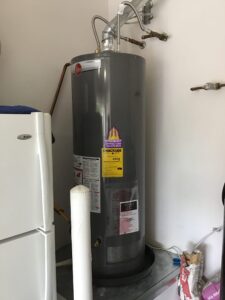
High temperatures in Phoenix can accelerate wear on water heater components and increase tank pressure.
Phoenix Plumbing Risk by Season
Understanding when your plumbing is most at risk helps you schedule maintenance and inspections at the right times rather than reacting after something fails.
| Season | Typical Temp Range | Primary Plumbing Risk | What to Watch For |
|---|---|---|---|
| Spring (Mar-May) | 75-105 degrees F | Ground warming; pipe joint stress begins | Slow pressure drops; minor joint seeps |
| Summer (Jun-Aug) | 105-120 degrees F | Slab leaks; supply line failures; water heater strain | Sudden pressure loss; warm spots on floors; high utility bills |
| Monsoon (Jul-Sep) | 75-115 degrees F | Sewer backups; drain overload; soil shift | Gurgling drains; sewage odor; slow fixtures |
| Fall (Oct-Nov) | 65-95 degrees F | Post-summer inspection window | Best time for annual plumbing maintenance |
| Winter (Dec-Feb) | 35-65 degrees F | Freeze risk on exposed pipes; thermal contraction | Pipe bursts after overnight freezes; dripping faucets |
Slab Leaks: Why Phoenix Sees More of Them in Summer
How Heat Causes Slab Leaks
A slab leak occurs when a water supply or drain line running through or under your concrete foundation develops a leak. In Phoenix, the most common cause is a combination of copper pipe corrosion and thermal fatigue. Copper supply lines embedded in concrete expand when the slab heats up and contract when it cools overnight. Over years, this repeated movement wears down the pipe at points where it contacts the concrete, abrading the exterior and eventually creating pinhole leaks. Summer accelerates this process because the daily temperature swing from the overnight low to the afternoon high is more extreme, and because the slab stays warm through the night rather than cooling fully.
Warning Signs of an Active Slab Leak
Slab leaks are often invisible for weeks before they become obvious. By the time you see water, significant damage may already have occurred to the slab, the flooring above it, and potentially the structural framing. Catching a slab leak early is largely a matter of knowing what to look for:
- Unexplained increases in your water bill with no change in usage habits
- Warm or hot spots on tile or hardwood floors, particularly in hallways or near exterior walls
- The sound of running water when all fixtures and appliances are off
- Cracks appearing in floor tile, especially in a line or following a wall
- Reduced water pressure at multiple fixtures simultaneously
- Wet or damp spots on carpet that have no obvious source
What to Do If You Suspect a Slab Leak
If you notice two or more of the warning signs above, shut off your main water supply and call a plumber immediately. Do not wait to see if the situation resolves. A small pinhole leak under a slab can discharge hundreds of gallons per day into the soil beneath your foundation. Trident Plumbing provides slab leak detection and repair throughout the Phoenix metro, using electronic leak detection equipment to locate the exact failure point without unnecessary concrete removal. In some cases, a full repiping is the most cost-effective long-term solution when multiple leaks have developed or when original copper lines are approaching end of life.
Heat Stress on Supply Lines and Pipe Joints
Flexible Supply Hoses: The Hidden Failure Point
The braided stainless steel or rubber supply hoses that connect your shutoff valves to toilets, sinks, and appliances are among the most overlooked plumbing components in any home. In Phoenix’s heat, the rubber core inside these hoses degrades faster than it would in a temperate climate. Most manufacturers rate rubber supply hoses for 5 years; in Phoenix conditions, the practical safe lifespan is closer to 3 to 4 years for hoses in warm locations such as under-sink cabinets against exterior walls or in bathrooms without insulation. A burst supply hose can discharge 500 gallons per hour and will flood a room in minutes. Replacing these hoses proactively as part of a plumbing maintenance visit is inexpensive insurance against a serious loss.
PEX and CPVC in High-Temperature Zones
PEX tubing is now the standard in new Phoenix construction and has excellent thermal characteristics, but even PEX has temperature limits. Standard PEX is rated to 200 degrees Fahrenheit at low pressure, which sounds like a generous margin until you consider that attic supply runs in Phoenix can hit 160 to 170 degrees on the hottest days, and that pressure is not always low in a municipal supply system. CPVC, used in some Phoenix homes built between the 1980s and early 2000s, has a lower heat tolerance and becomes brittle with age. CPVC that was installed 20 or more years ago is approaching the end of its reliable service life, particularly in attic or exterior wall runs.
Joint Failure and Thermal Cycling
Every soldered copper joint, every threaded brass fitting, and every push-fit connector in your plumbing system goes through a small expansion and contraction cycle every day as temperatures rise and fall. In Phoenix, those daily cycles are larger in magnitude than in most U.S. cities, and they happen year-round rather than just seasonally. A joint that was soldered correctly and held for 20 years can develop a slow seep as the cumulative fatigue from thousands of thermal cycles begins to open microscopic gaps. This is one reason that water line repair calls increase noticeably in the Phoenix metro every summer, particularly for homes that were built in the 1980s and 1990s.
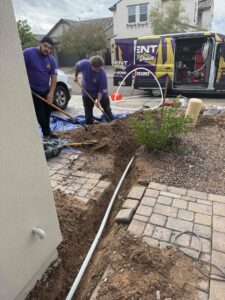
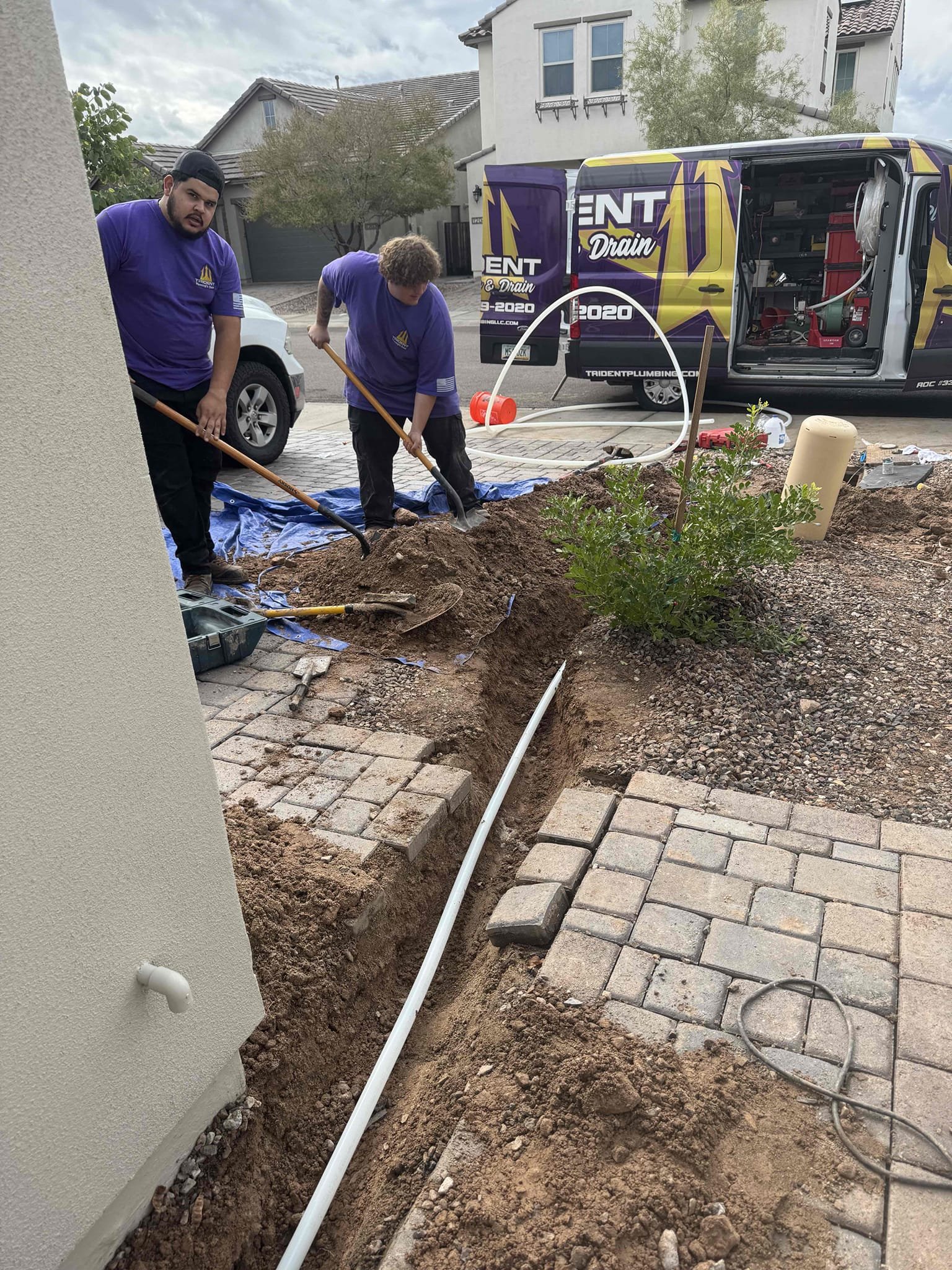
Identifying and repairing a damaged water supply line before summer temperatures peak.
What Heat Does to Your Drains and Sewer Lines
Root Intrusion Accelerates in Summer
Tree and shrub roots in Phoenix grow aggressively toward any available water source, and your sewer line is one of the most consistent moisture sources in a desert yard. During summer, when surface soil dries out and plant stress increases, root systems extend deeper and more aggressively. Roots that were merely probing a minor sewer joint crack in spring may have fully intruded and begun accumulating debris by August. Annual sewer service and drain cleaning helps identify and clear root intrusion before a full blockage forces an emergency call.
Monsoon Season and Drain Overload
Phoenix’s monsoon season, which runs roughly from mid-June through late September, brings sudden heavy rain after months of dry heat. The hardpan desert soil and caliche layers beneath many Phoenix yards do not absorb water quickly, which means runoff can be intense and sudden. Floor drains, patio drains, and cleanouts that are partially blocked by debris or grease accumulation from the dry season can back up during a monsoon event, pushing water back into the home. Hydro-jetting drain lines before monsoon season clears any accumulated buildup and maximizes your drain capacity before the storms arrive.
Grease and FOG Buildup
Heat accelerates the breakdown and re-solidification of fats, oils, and grease (FOG) in kitchen drain lines. What flows easily through the drain in winter can congeal more aggressively in summer, particularly in drain lines running through sun-exposed exterior walls or under-slab sections where pipe temperatures are elevated. Homes that use the kitchen heavily during summer, particularly for large family gatherings and outdoor cooking preparation, often see a corresponding uptick in kitchen drain blockages from late June through August.
Outdoor Plumbing and Irrigation Vulnerability
Hose Bibbs and Outdoor Shutoffs
Outdoor hose bibb valves in Phoenix take a beating from UV exposure and thermal cycling. The packing inside older brass bibbs dries out and develops seeps, and the plastic components on cheaper ball valves become brittle and crack. A slow leak at a hose bibb can go unnoticed for months because it is outdoors, but even a quarter-turn drip at 60 PSI wastes hundreds of gallons per month. Check all outdoor shutoffs and fixture connections before summer begins and replace any valve that is difficult to operate or shows mineral staining around the packing nut.
Irrigation Systems and Pressure Spikes
Irrigation supply lines buried just a few inches below Phoenix’s sun-baked soil surface reach high temperatures during summer afternoons. When an irrigation timer fires after the sun goes down, cooler municipal water enters lines that may still be holding residual heat from the day, creating a thermal shock that stresses push-fit fittings and emitter connections. Irrigation system failures that create standing water near the foundation are particularly worth addressing quickly, since sustained soil moisture near a slab creates the expansion and contraction conditions that contribute to slab movement and pipe fatigue.
Protecting Your Plumbing Before and During Summer
Pre-Summer Inspection Checklist
The best time to identify heat-related plumbing vulnerabilities is April or early May, before temperatures peak. A professional inspection at this time can catch deteriorating supply hoses, marginal TPR valves, and early-stage joint seeps before summer turns a slow leak into an emergency. Key items to cover:
- Inspect all flexible supply hoses under sinks, behind toilets, and at appliance connections; replace any older than 4 years
- Test the water heater TPR valve for proper operation and check the anode rod condition
- Check water pressure at an outdoor hose bibb; normal range is 40 to 80 PSI, and high pressure accelerates joint wear
- Inspect exposed supply lines in the attic for signs of heat damage, discoloration, or joint weeping
- Run all fixture shutoff valves through their full range of motion to confirm they operate and seal correctly
- Clear debris from all exterior drains and check that cleanout caps are secure and accessible
Water Pressure Management
High water pressure is one of the most damaging and least-discussed contributors to heat-related plumbing failures in Phoenix. When supply pressure runs above 80 PSI, every thermal expansion cycle puts greater stress on pipe joints, valve seats, and supply hose connections. If you do not know your home’s supply pressure, a plumber can measure it during a plumbing maintenance visit. Homes with pressure above 80 PSI benefit from a pressure reducing valve (PRV), which protects the entire plumbing system from the compounding effects of high pressure and thermal stress.
When to Call for Emergency Service
Some plumbing failures do not wait for a convenient appointment. If you experience a sudden loss of water pressure throughout the house, see or hear water running inside walls or under floors, notice your water meter moving when all fixtures are off, or find standing water near your foundation, contact Trident Plumbing’s emergency plumbing service immediately. Summer plumbing emergencies left unaddressed even for a few hours can result in foundation damage, mold growth in drywall cavities, and flooring replacement costs that far exceed the repair itself.
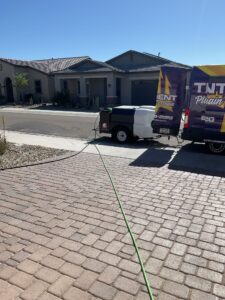
Clearing sewer lines with hydro-jetting before monsoon season helps prevent backups from heavy rain.
Frequently Asked Questions
Why do slab leaks happen more often in summer in Phoenix?
The combination of sustained high ground temperatures and large daily temperature swings accelerates the thermal fatigue that causes slab leaks. Copper pipes embedded in or running under the slab expand and contract with the temperature, abrading against concrete until pinhole leaks develop. Phoenix summers are uniquely damaging because the slab never fully cools overnight, meaning the pipes experience continuous thermal stress for three to four months rather than during isolated hot spells.
Can the heat actually damage PEX or PVC pipes?
Yes, under specific conditions. PEX is rated to 200 degrees Fahrenheit at low pressure, but attic spaces in Phoenix regularly exceed 150 degrees on summer afternoons, and municipal supply pressure is not always low. CPVC, used in many Phoenix homes from the 1980s through the early 2000s, has a lower heat tolerance and becomes brittle with age. CPVC supply runs in attics or exterior walls that are 20 or more years old should be inspected and considered for proactive replacement.
How does Phoenix heat affect my water heater’s lifespan?
Phoenix heat shortens water heater lifespans in two primary ways. First, warmer inlet water causes more frequent but shorter heating cycles, accelerating wear on heating elements, thermostats, and gas components. Second, elevated ambient temperatures in garages and attics stress the tank exterior and insulation. A tank water heater in Phoenix typically sees the equivalent of 15 to 20 percent more annual operating cycles than the same unit installed in a cooler region. Regular water heater maintenance and prompt repair when issues arise are the most effective ways to maximize service life.
What temperature should I set my water heater to in a Phoenix summer?
The standard recommendation from the U.S. Department of Energy is 120 degrees Fahrenheit, which balances energy efficiency with Legionella bacteria prevention. In Phoenix, some homeowners lower their setting slightly during summer, but going below 120 degrees creates a bacterial growth risk that outweighs the modest energy savings. Rather than adjusting the thermostat, focus on the water heater’s condition through annual water heater maintenance, which has a larger impact on efficiency and safety than thermostat adjustments.
How do I know if my supply hoses are at risk of bursting?
The clearest indicators are age and visible deterioration. Rubber braided supply hoses older than 3 to 4 years in Phoenix conditions should be considered at risk. Look for bulging at either end of the hose, cracks or stiffness in the hose body, or corrosion at the brass fittings. Stainless steel braided hoses with a polymer liner last longer but are not immune. The safest approach is proactive replacement during a scheduled plumbing maintenance visit rather than waiting for a failure that can discharge hundreds of gallons per hour.
Does Phoenix heat affect water quality?
Indirectly, yes. Elevated supply line temperatures accelerate the leaching of minerals from older copper and brass fittings into the water, which can slightly increase metallic taste. More practically, hot supply lines in summer mean your “cold” tap water is noticeably warm for the first 30 to 60 seconds after the tap opens, especially in the morning. For households concerned about water quality beyond temperature, a reverse osmosis system or whole-home water filtration provides consistent quality year-round regardless of supply line temperatures.
When is the best time of year to schedule a plumbing inspection in Phoenix?
April or early May is ideal. Inspecting your plumbing before the summer heat peaks gives you time to address any issues without the urgency and scheduling pressure that accompanies summer emergency calls. October and November are the second-best window for a post-summer assessment, which is a good time to evaluate any heat-related wear before the holiday season. Trident Plumbing offers plumbing maintenance services across the Phoenix metro, and you can check for current special offers to reduce the cost of a pre-season inspection.
Get Ahead of Summer Before It Damages Your Plumbing
Phoenix heat does not damage plumbing all at once. It works gradually, through thermal cycles, through sustained ground temperatures, through accelerated wear on components that are simply not designed for the conditions they face here in the Valley. Most of the failures that homeowners experience in July and August were preventable with a spring inspection and a few targeted repairs completed while the temperatures were still manageable. By the time summer peaks, your plumbing should be prepared for it, not struggling to keep up with it.
Trident Plumbing serves homeowners across the greater Phoenix metro, including Scottsdale, Glendale, Peoria, Goodyear, Surprise, and all surrounding communities. Whether you want a pre-summer plumbing inspection, need a slab leak evaluated, or are dealing with a water heater that is showing signs of heat-related wear, our licensed plumbers are familiar with exactly what Phoenix summers do to residential plumbing. Request your free estimate and let’s make sure your plumbing is ready for whatever the summer brings.
by Weslo Digital