Hard Water in Phoenix: What It’s Doing to Your Pipes, Fixtures, and Water Heater





May 12, 2026
Phoenix tap water consistently ranks among the hardest in the United States, with hardness levels typically measuring between 200 and 300 parts per million (ppm) depending on the season and your water source. That mineral load, made up primarily of calcium and magnesium, does not stay dissolved forever. It precipitates out as white, chalky scale wherever water heats up, slows down, or sits still. Over time, that scale costs you money through higher energy bills, shorter appliance lifespans, and plumbing repairs you could have avoided. If you are noticing white buildup on your faucets, cloudy spots on your shower fixtures, or a water heater that seems to be working harder than it should, hard water is almost certainly the reason.
How Hard Is Phoenix Water, Really?
The Numbers Behind the Problem
The U.S. Geological Survey classifies water above 180 ppm as “very hard.” Most Phoenix-area homes receive water from the Salt River Project or the Central Arizona Project, both of which pull from the Colorado River. That source water arrives already loaded with dissolved minerals. Depending on how much surface water versus groundwater your utility blends, your home may be receiving anywhere from 200 to 350 ppm on a given day. For context, the softness threshold starts below 60 ppm, meaning Phoenix water is often four to five times softer water levels.
Why Desert Conditions Accelerate Damage
High temperatures speed up scale formation. When hot water sits in a water heater tank at 120 to 140 degrees Fahrenheit, minerals precipitate out faster than they would in cooler climates. The same effect happens inside your dishwasher and washing machine. Phoenix’s extreme summer heat also means your plumbing, especially pipes running through slab foundations, is exposed to ground temperatures that can push 90 degrees or higher, which accelerates mineral deposition inside supply lines well beyond what homeowners in milder climates would ever experience.
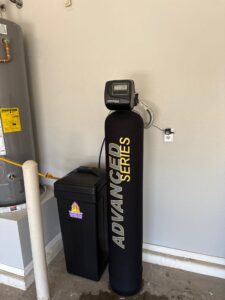
A whole-home water softener system installed by Trident Plumbing & Drain to combat Phoenix hard water.
What Hard Water Does to Your Water Heater
The Sediment Layer Problem
Inside a traditional tank water heater, minerals settle out of suspension and fall to the bottom where they accumulate as a dense layer of sediment. That sediment insulates the heating element from the water above it, forcing the element to run hotter and longer to reach the same temperature. A tank with just half an inch of sediment can consume 20 to 30 percent more energy than a clean unit. You will often hear this as a rumbling, popping, or kettling sound during heating cycles, which is steam escaping through cracks in the sediment layer. Annual water heater maintenance that includes sediment flushing can recover meaningful efficiency.
Shortened Water Heater Lifespan
The average tank water heater is rated for 8 to 12 years. In Phoenix’s hard water conditions without any treatment, many homeowners see failures at 6 to 8 years. The combination of constant thermal stress and sediment buildup depletes the anode rod faster, which is the sacrificial component that prevents tank corrosion from the inside out. Once the anode rod is spent, the tank wall itself begins corroding. Regular water heater repair and maintenance checks can catch anode rod depletion before it leads to tank failure.
Tankless Water Heaters Are Not Immune
Many Phoenix homeowners switch to tankless water heaters expecting to escape the sediment problem. Tankless units do not store water, so sediment accumulation is not the primary concern. However, the narrow passageways inside a tankless heat exchanger are extremely sensitive to limescale. Even modest scale deposits can reduce flow to the point where the unit throws a low-flow error and shuts off. Tankless heaters in hard water areas need annual descaling service, a procedure that flushes a descaling solution through the heat exchanger circuit to dissolve mineral buildup before it becomes a functional problem.
Hard Water Damage by System: What to Expect and When
The table below summarizes how hard water affects each major plumbing component in a typical Phoenix home, along with a realistic timeline for when problems tend to emerge without a water softener or treatment system in place.
| System / Fixture | Hard Water Effect | Typical Timeline | Severity |
|---|---|---|---|
| Water Heater (tank) | Sediment on heating element; 25-50% efficiency loss | 2-3 years | High |
| Tankless Water Heater | Scale in heat exchanger; potential shutdown | 1-2 years | Very High |
| Copper Supply Pipes | Scale narrows interior diameter; reduces pressure | 5-10 years | Medium-High |
| Faucets and Aerators | Mineral deposits clog screens; damage washers | 6-18 months | Medium |
| Showerheads | Nozzle blockage; uneven spray; reduced pressure | 6-12 months | Medium |
| Dishwasher / Washing Machine | Limescale on heating coils; shortened appliance life | 2-4 years | High |
| Shower and Tub Surfaces | White film and etching on tile, glass, and acrylic | Weeks | Low-Medium |
| Drain Lines | Soap scum and mineral buildup compounds clogs | 1-3 years | Medium |
What Hard Water Does to Your Pipes
Scale Narrowing in Copper Supply Lines
Copper pipe is standard in most Phoenix homes built before the mid-1990s, and it is particularly prone to limescale accumulation on its interior walls. In heavily scaled pipes, the usable interior diameter can shrink from the original three-quarters of an inch to under half an inch, which reduces water pressure at fixtures throughout the home. You will typically notice this first at the farthest fixtures from your main supply line. If multiple rooms seem to have weaker pressure than they once did, scaled supply lines are a common cause. Our team handles piping and repiping for homes where scale damage has advanced beyond what cleaning can address.
Slab Leaks and Hard Water
In Phoenix, water supply lines commonly run through or beneath the concrete slab foundation. Scale buildup inside those lines creates turbulence in the water flow, which accelerates erosion corrosion on the interior pipe wall. Over years, this can thin the pipe to the point of failure, resulting in a slab leak. Slab leaks are expensive to repair and can cause significant structural and water damage before they are detected. Hard water treatment is one of the most effective long-term strategies for extending the life of in-slab plumbing, particularly in homes with original copper lines.
PVC and PEX: Better, But Not Bulletproof
Homes built after the mid-1990s are more likely to have PVC or PEX supply lines, which do not corrode the way copper does. Scale can still accumulate inside these pipes, though it tends to adhere less aggressively. The greater concern with newer plastic plumbing is at connection points and valves, where mineral deposits cause seizing, leaking, and premature valve failure well before the pipe itself shows damage.
How Hard Water Damages Fixtures and Appliances
Faucets, Aerators, and Showerheads
The aerator screens on faucets and the nozzle holes on showerheads are the first places you will see hard water damage because they have the smallest openings and experience the most evaporation. Minerals deposit rapidly around each tiny hole, gradually blocking it and redirecting flow. In Phoenix, aerator cleaning or replacement may be needed every 6 to 12 months without a treatment system. Beyond the visible crust, scale also degrades the rubber washers and O-rings inside faucet valves, leading to dripping that requires repair sooner than the fixture’s rated service life.
Bathtubs, Sinks, and Tile
Hard water leaves a white or gray film on acrylic and porcelain tub surfaces, sink basins, and tile grout. On glass shower enclosures, mineral etching can become permanent if left for more than a few months. Surface cleaning removes fresh deposits, but etched glass and stained grout cannot be reversed without professional refinishing or replacement. This is a cosmetic issue on the surface, but it signals the same mineral-rich water doing structural damage inside your pipes and appliances.
Drain Lines and Soap Scum
Hard water reacts with soap to form an insoluble curd, the familiar soap scum that coats bathtub walls and shower floors. That same curd accumulates inside drain lines, compounding the normal buildup of hair and debris. In Phoenix homes with hard water and older drain lines, soap scum and mineral deposits can create partial blockages that trap everything else going down the drain. If you deal with slow drains throughout the house that return shortly after treatment, hard water chemistry is likely a contributing factor.
Your Options for Treating Hard Water in Phoenix
Whole-Home Water Softeners
A whole-home water softener is the most comprehensive solution. Ion exchange softeners replace calcium and magnesium ions with sodium ions, producing water that does not form scale in pipes, appliances, or on fixture surfaces. A properly sized and maintained softener effectively eliminates scale formation throughout your entire plumbing system. For most Phoenix households, this represents the highest-return investment you can make for long-term plumbing health, extending the life of water heaters, appliances, and supply lines simultaneously.
Reverse Osmosis for Drinking Water
If whole-home softening is not in the immediate budget, a point-of-use reverse osmosis system at the kitchen sink provides filtered, low-mineral water for drinking and cooking. RO systems remove 90 to 99 percent of dissolved solids, including the calcium and magnesium responsible for hard water. They do not protect your pipes and appliances, but they address the taste and quality concerns that often accompany high-mineral water.
Carbon Filtration
Whole-home carbon filtration addresses chlorine, taste, and odor issues but is not designed to remove hardness minerals. Carbon filters are often paired with a softener as part of a complete water filtration solution. If your concerns include both hardness and water taste, the two systems work well together.
Warning Signs Your Plumbing Is Already Affected
Hard water damage is gradual and largely invisible until something fails. Knowing what to watch for helps you catch problems early:
- White or yellow crust around faucet bases, showerheads, or supply line connections
- Reduced water pressure at one or more fixtures that was not present before
- Rumbling, popping, or kettle sounds from your water heater during heating cycles
- Water heater taking longer than usual to recover after heavy use
- Recurring slow drains that return quickly after snaking or chemical treatment
- Permanently cloudy or etched glass on shower enclosures
- Utility bills rising without a change in household water usage habits
- Dishwasher leaving white film on glasses or dishes after a full cycle
If you are noticing several of these signs, a plumbing maintenance inspection can identify exactly which components are affected and what level of intervention makes sense for your home before a minor issue becomes a major repair.
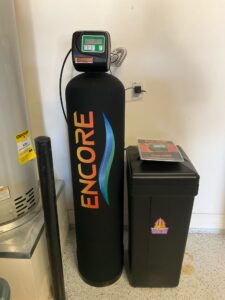
A combined filtration and softening unit provides a comprehensive solution for Phoenix’s high mineral content and chlorine taste.
A Practical Hard Water Maintenance Plan for Phoenix Homes
Every Year
Flush your tank water heater to remove accumulated sediment. Inspect the anode rod and replace it if it has depleted to less than half its original diameter, which in Phoenix’s hard water often happens within three years. Have a plumber check supply line connections and fixture shutoff valves for evidence of scale buildup or early corrosion.
Every Six Months
Remove and soak faucet aerators in white vinegar to dissolve mineral deposits. Inspect showerheads for blocked nozzles and flow reduction. Check filter cartridges on any point-of-use filtration systems and replace them on the manufacturer’s recommended schedule.
The Long-Term Case for Water Softener Installation
Every year without treatment is another year of scale accumulating in your pipes and appliances. The installed cost of a quality whole-home water softener typically runs between $800 and $2,500 depending on system capacity and your household’s water use. That investment pays for itself through extended appliance life, lower energy costs, and avoided plumbing repairs. Trident Plumbing offers financing options to make whole-home water treatment accessible without a large upfront cost.
Frequently Asked Questions
How hard is the water in Phoenix, Arizona?
Phoenix water typically measures between 200 and 350 parts per million (ppm) of dissolved hardness, depending on your water provider and the season. This places it firmly in the “very hard” category by U.S. Geological Survey standards. Homes served by the Salt River Project and those with groundwater blends tend to see the highest readings. You can request a water quality report from your utility or have your water tested professionally for an exact measurement at your address.
How do I know if hard water is damaging my water heater?
The most common symptoms are rumbling or popping sounds during heating cycles, rising energy bills without a change in usage, and water that takes noticeably longer to reach temperature. If your tank water heater is more than five years old and has never been flushed, there is almost certainly a sediment layer affecting performance. A plumber can flush the tank and inspect the anode rod to assess how much hard water damage has occurred. Trident Plumbing offers water heater repair and maintenance services for Phoenix homeowners across our full service area.
Can hard water cause low water pressure throughout my house?
Yes. In older copper plumbing, limescale can narrow the interior diameter of supply pipes to the point where flow is noticeably restricted at multiple fixtures at once. If pressure has declined gradually over several years rather than suddenly, scaled pipes are a likely cause. A plumber can use pressure testing and visual inspection to confirm the diagnosis and recommend whether targeted cleaning or a broader repiping is the appropriate solution.
Does a tankless water heater solve the hard water problem?
Not on its own. Tankless heaters eliminate sediment accumulation, but their narrow heat exchanger passages are highly vulnerable to limescale. Without annual descaling service, a tankless water heater in Phoenix can develop enough scale to trigger error codes and shutdowns within two years of installation. Pairing a tankless heater with a whole-home water softener is the most effective combination for both efficiency and long-term reliability.
Is Phoenix tap water safe to drink despite the hardness?
Yes. Hard water is not a health hazard. High mineral content is unpleasant in taste and damaging to plumbing and appliances, but calcium and magnesium are not contaminants in the traditional public health sense. The primary concerns with Phoenix municipal water beyond hardness tend to be chlorine taste and, in some areas, disinfection byproducts. A reverse osmosis or carbon filtration system at the tap addresses those concerns effectively.
How much does a whole-home water softener cost in Phoenix?
Installed cost for a quality whole-home water softener typically ranges from $800 to $2,500 in the Phoenix market, depending on system size, brand, and any additional filtration included. Most homeowners see a return on that investment within three to five years through energy savings and avoided appliance replacements. Trident Plumbing provides free estimates and financing to fit softener installations into most budgets.
What is the difference between a water softener and a water filter?
A water softener specifically targets hardness minerals through ion exchange. A water filter, such as a carbon or reverse osmosis system, removes a different set of concerns including chlorine, sediment, and dissolved solids. For Phoenix homeowners dealing with both hard water and taste concerns, the most effective approach is typically a softener paired with an under-sink RO system for drinking and cooking water.
The Bottom Line on Hard Water in Phoenix
Hard water is not a quirk you simply learn to live with. Every day without treatment, mineral deposits are accumulating inside your pipes, your water heater, and your fixtures, quietly shortening their service lives and raising your utility costs. The damage is gradual and largely invisible until something fails, which is exactly why so many homeowners are caught off guard by a water heater that dies years early or a repiping job that could have been avoided. Understanding what hard water actually does, and taking steps to address it, is one of the highest-return maintenance decisions you can make as a Phoenix homeowner.
Trident Plumbing serves homeowners across the greater Phoenix area, including Scottsdale, Glendale, Peoria, Goodyear, and dozens of surrounding communities. Whether you are ready to explore a whole-home water softener, need a water heater inspection after years of untreated hard water, or want a full assessment of your plumbing system’s condition, our licensed plumbers can give you a straightforward picture of where things stand. Request your free estimate and let’s get ahead of the problem before scale does any more damage.
by Weslo Digital